Invisible vibrations: the underrated risk in residential projects.
Why controlling vibrations matters
What vibrations are.
Vibrations are mechanical oscillations that travel through structures. They come from traffic, trams, nearby machinery, shared pumps and HVAC, lifts, washing machines, or even a gym on the floor below. If left unmanaged, they turn into structure-borne noise and everyday discomfort.
Risks of vibrations in residential settings.
Comfort and quality of life are the first to suffer: hums, rattles and a subtle sense of instability. Over time, vibrations can worsen micro-cracking and loosen light connections, and they can affect sensitive equipment (home-office gear, musical instruments, NAS/mini-servers).
Vibration frequency: what changes between low and high frequencies.
Not all vibrations are the same. Vibration frequency (Hz) tells you how many oscillations occur per second.
Low frequencies
travel farther through floor slabs and feel like slow “waves”.
Mid/high frequencies
more localized, often linked to building services or impact noise from footfall.
Knowing “where it resonates” helps you pick the right anti-vibration solution.
Measuring vibrations: how to set up a useful diagnosis.
Vibration measurement starts with a survey under real operating conditions (typical days/hours and peak moments). You map sources and transmission paths (direct and flanking), place sensors at key structural points and log the response in the various rooms. The result is a clear picture: what vibrates, how much, and at what frequency.
Vibration insulation in homes: the approach that works.
We use three different strategies, chosen case by case:
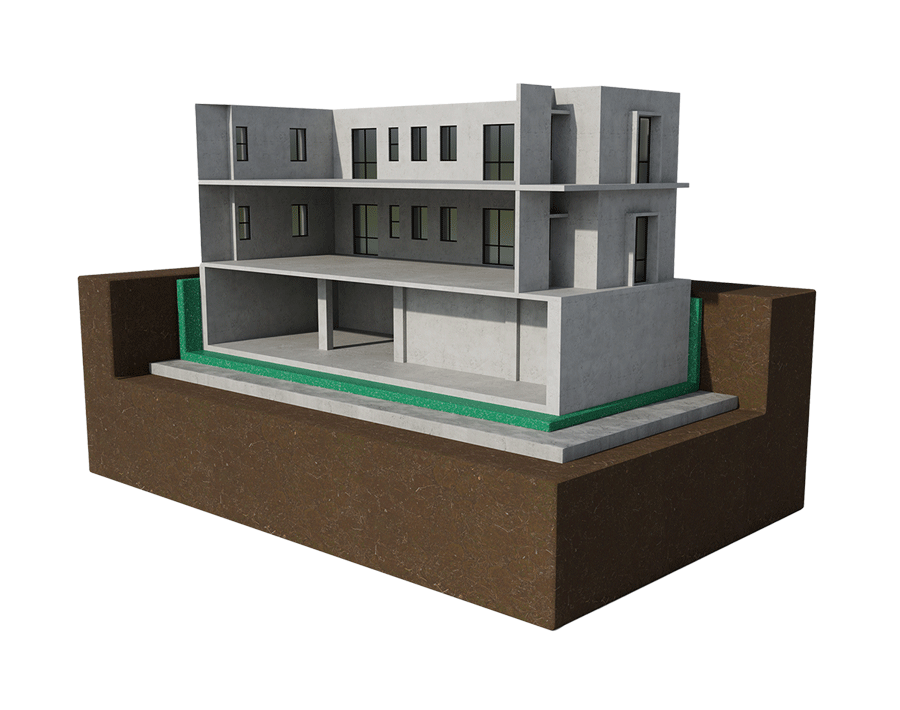
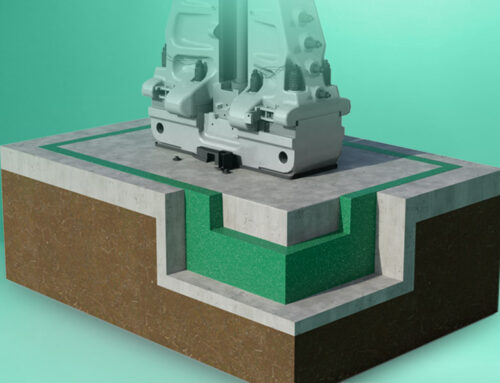
Foundation slab insulation
an elastic layer between slab and ground, plus lining the perimeter foundation walls, creates a continuous decoupling of the building
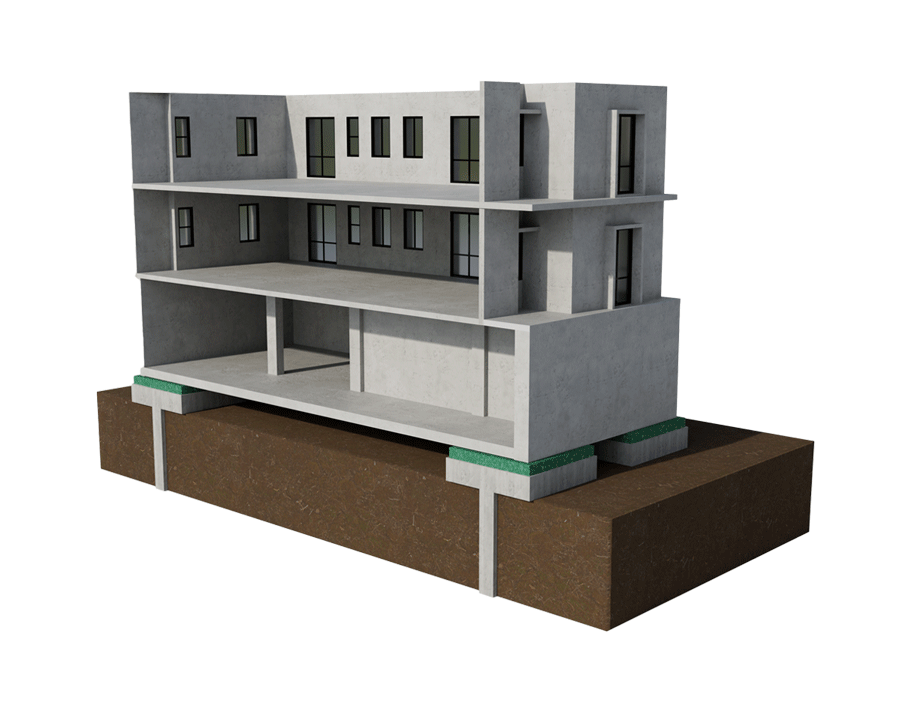
Foundation plinths or beams insulation
a targeted intervention on plinths/beams; with perimeter wall lining, you close the structure-borne path through the foundation.
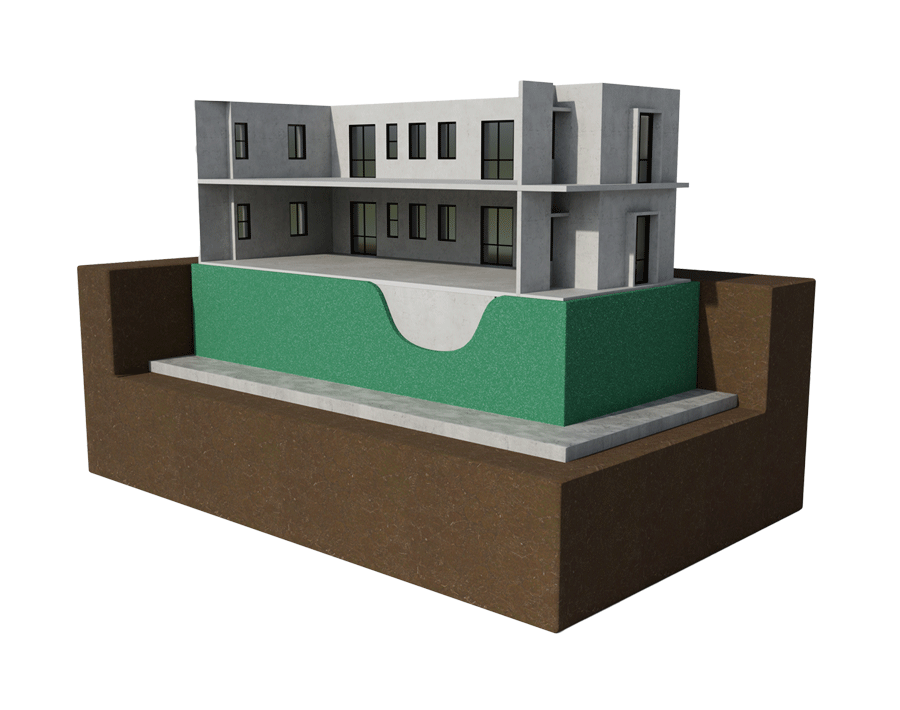
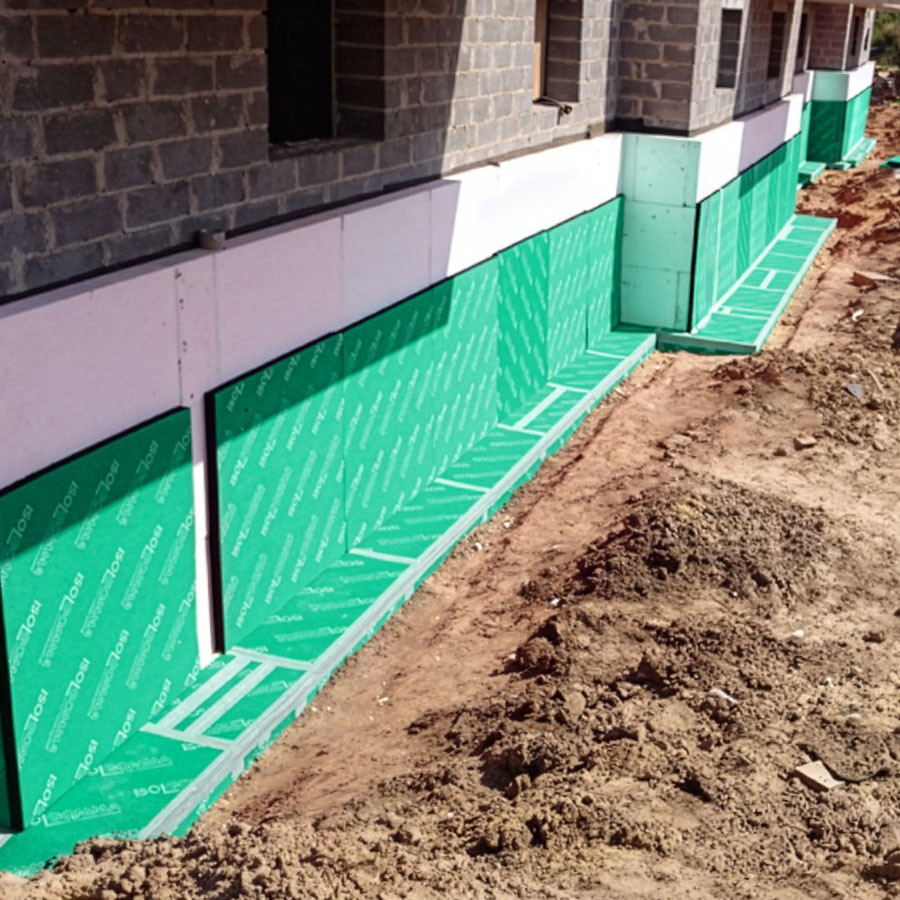
Foundation lateral insulation
an elastic lining on the perimeter foundation walls to reduce external vibrations — suitable for both existing buildings and new construction.
Anti-vibration solutions: how to choose pragmatically.
An anti-vibration element works only if it’s tuned to the problem. In practice, stiffness and thickness must match the load, the vibration frequency and the space available. Too stiff won’t filter; too soft can cause instability. The right choice blocks transmission without affecting everyday use of the spaces.
Measurable benefits at home.
Higher comfort
fewer hums, knocks and rattles.
Protected structures over time
with lower repeated stresses.
Quieter, more reliable building systems,
with vibrations kept in check.
Higher perceived value
thanks to spaces that are truly comfortable.
Our method — from diagnosis to installation.
We start with analysis (sources, paths, vibration measurement), model the response, define the right build-ups and anti-vibration elements, take care of on-site detailing, and verify the final result. A clear and certified process, focused on real comfort for people at home.
Planning a new build or a renovation?
Let’s talk: we’ll size the right anti-vibration solution and set up effective vibration insulation for your case, room by room.