Rubber anti-vibration solutions for railway.
Quieter, safer railway and tram tracks.
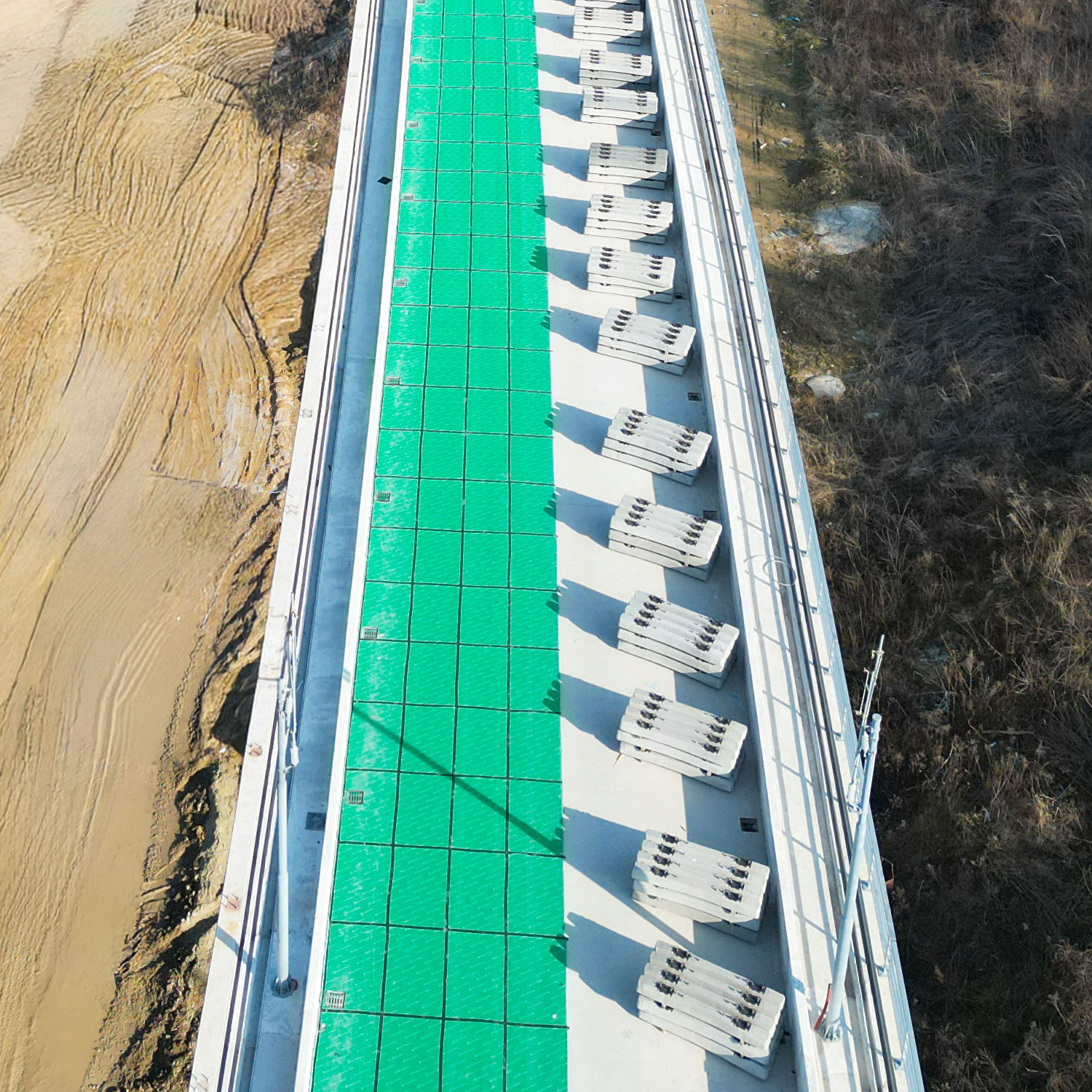
The rail sector is evolving. Speed, infrastructure, and urban integration are on the rise. With them, the need to control vibrations transmitted by train, tram, and metro tracks is increasing as well. Choosing the right anti-vibration solutions protects the line, nearby buildings and people’s comfort.
Why anti-vibration solutions matter in the rail sector.
The source is the wheel–rail contact; transmission occurs through fastenings, sleepers and railway ballast (or the slab in slab-track systems). Vibrations turn into structure-borne noise, disturbing neighborhoods, heritage buildings, sensitive laboratories, and indoor spaces. With properly dimensioned anti-vibration materials, comfort improves, structures are protected and the infrastructure’s service life is extended.
Rubber anti-vibration for railway and tram tracks.
Anti-vibration rubber provides adjustable stiffness and damping properties depending on thickness and density, allowing it to be calibrated according to railway and tramway requirements. Below, you’ll find the product families grouped by application area — from the substructure all the way up to the rail.
Under ballast mats
UBM
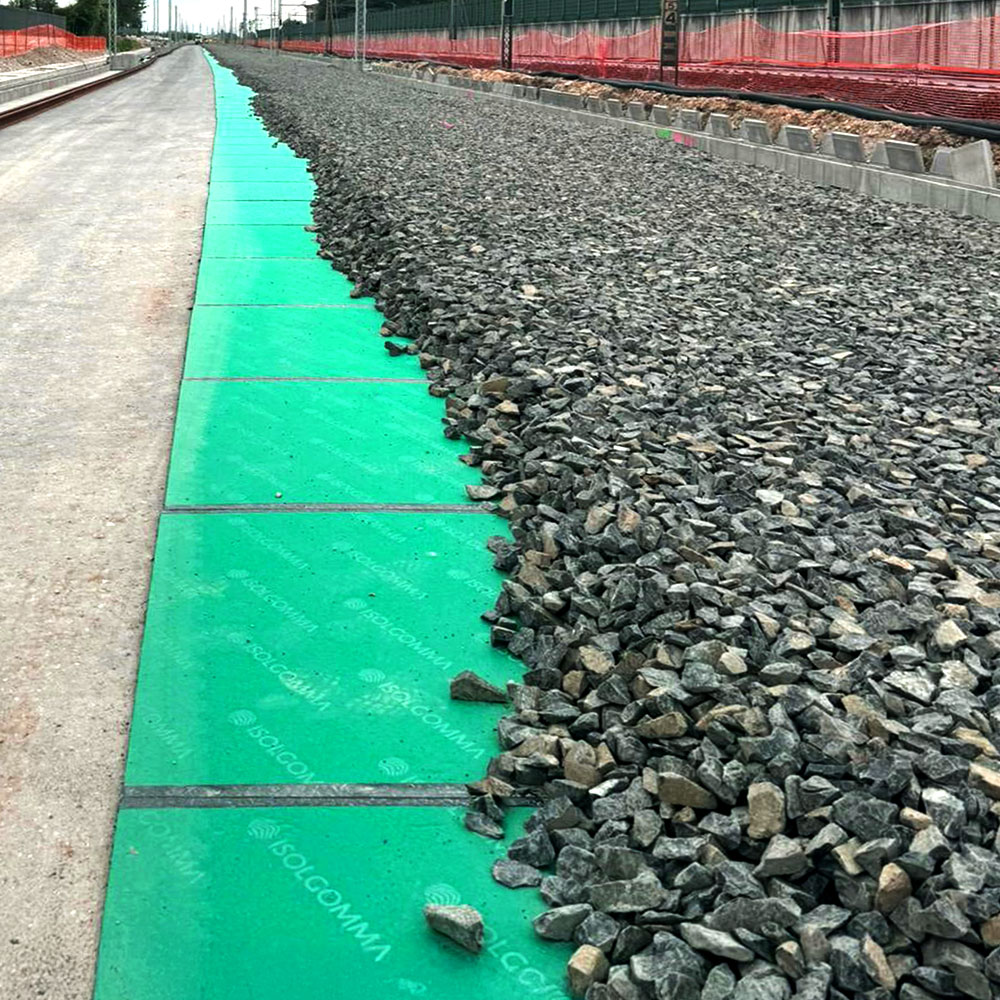
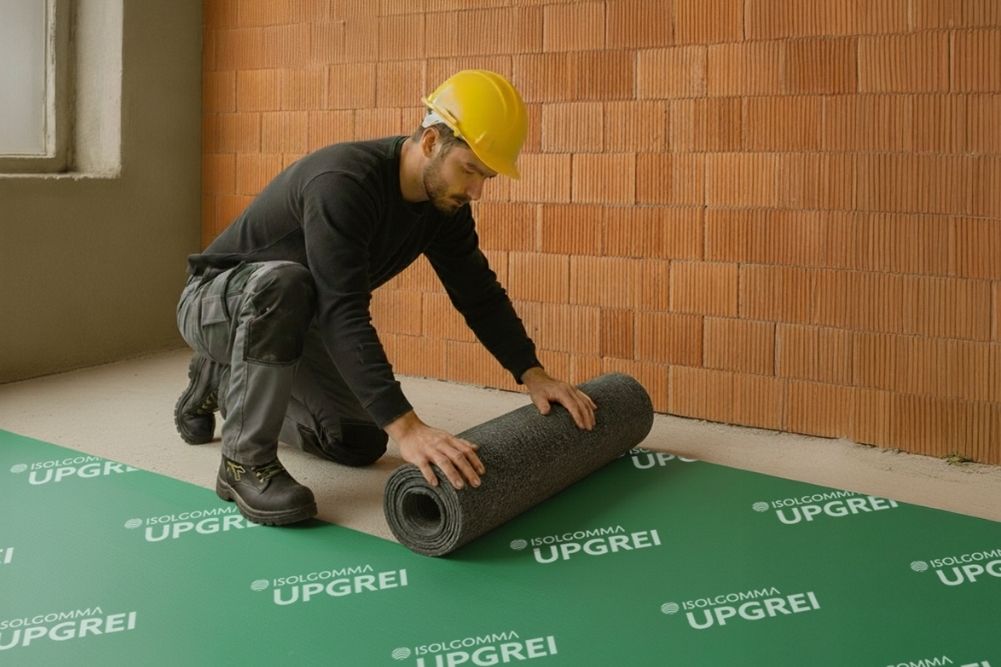
Elastomer mats beneath the ballast: a continuous elastic layer that cuts ground-borne vibrations transmission, helps keep track geometry stable and slows ballast degradation.
Under slab mats
USM
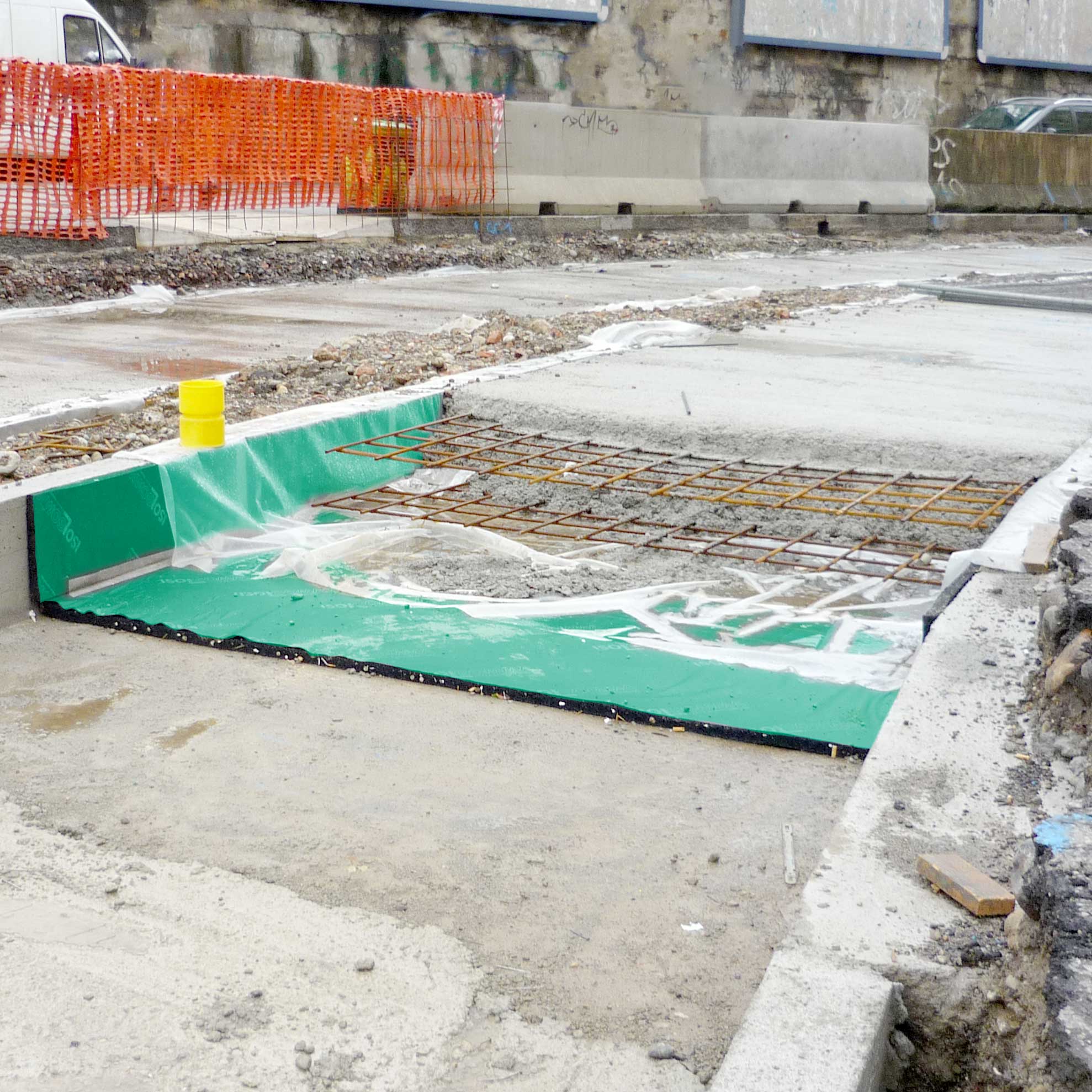
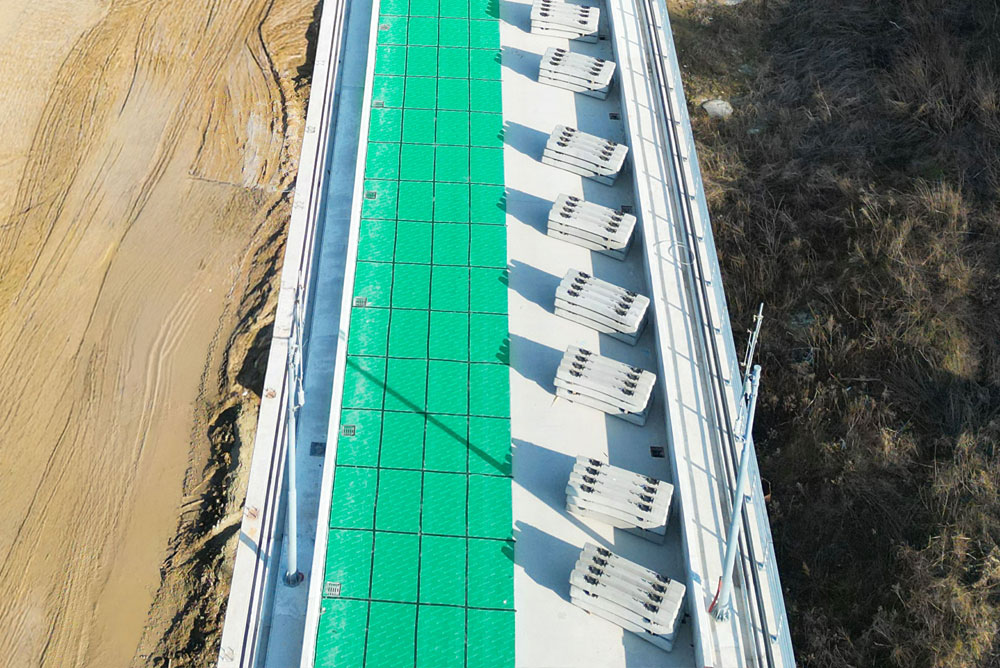
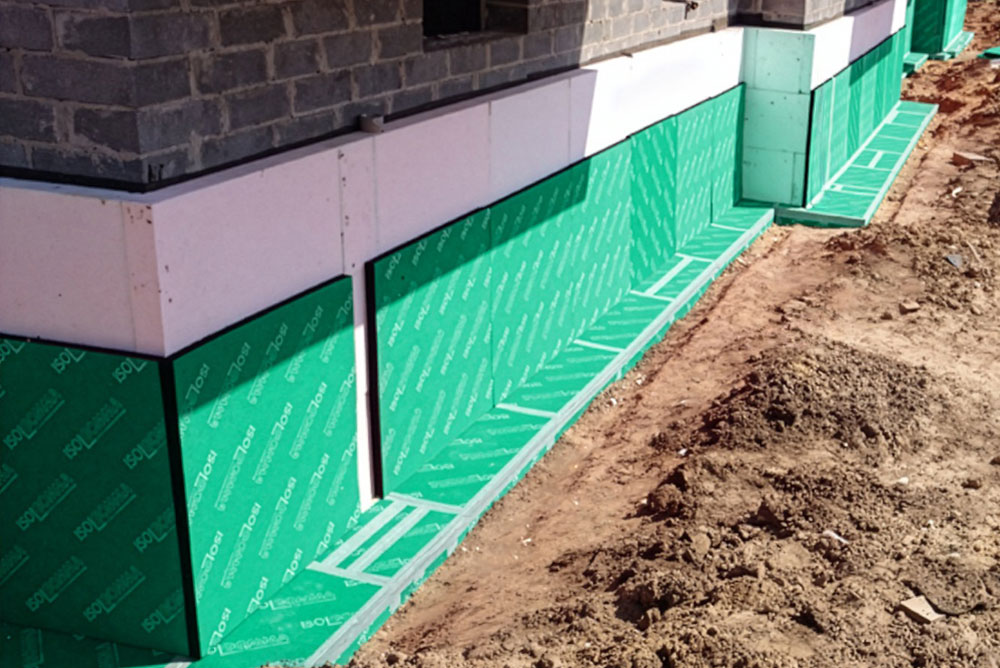
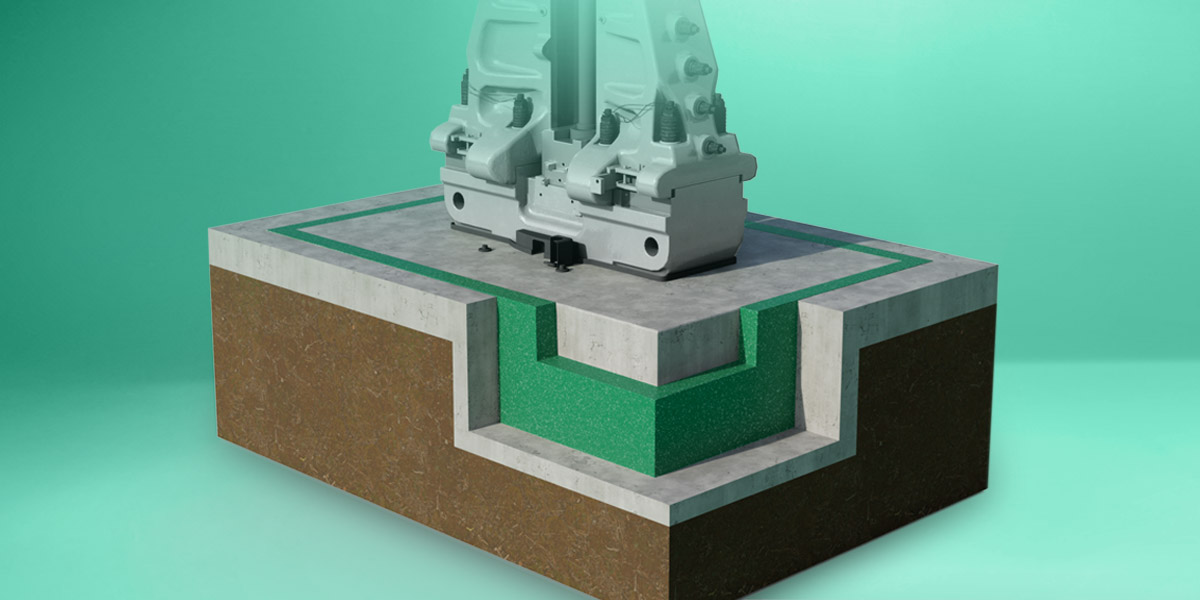
Under-slab mats for slab track systems: they provide full foundation insulation, preventing the rigid structure from transmitting vibrations.
Rail profiles
Classic
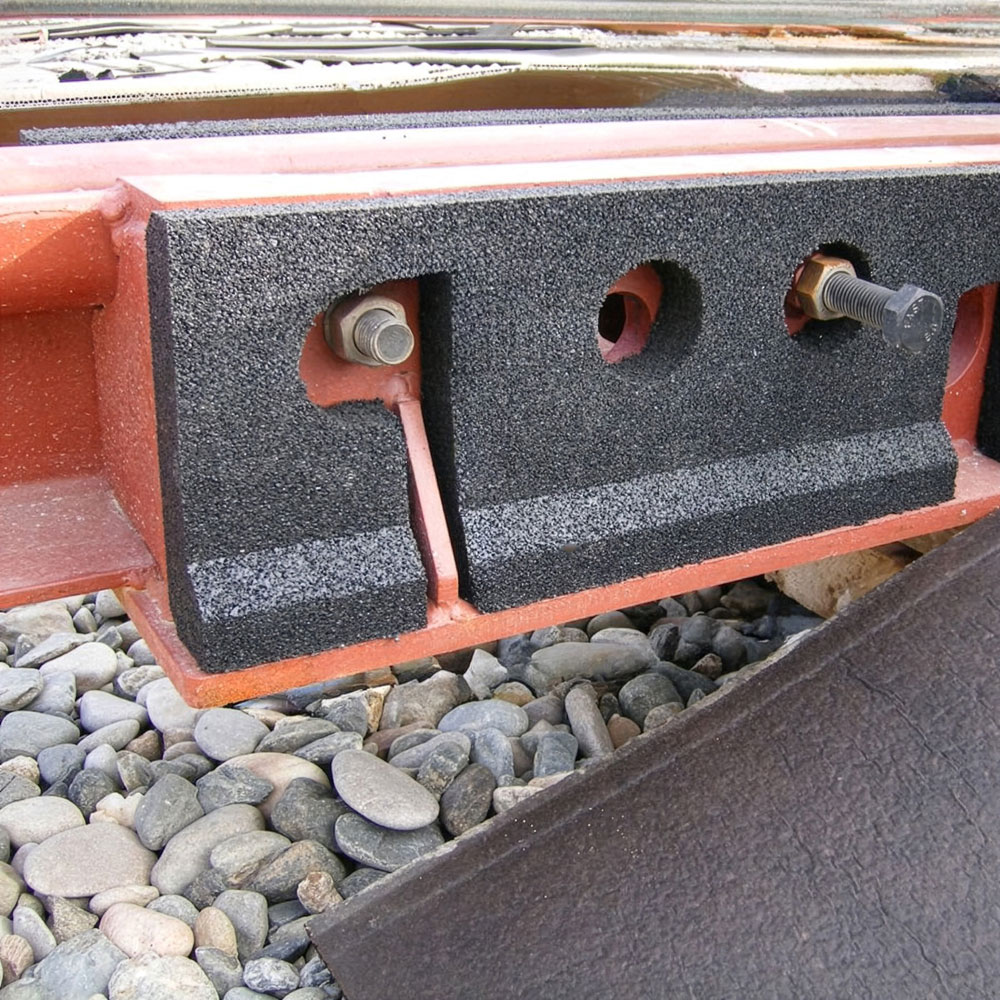
Elastomer rail profiles for conventional track (rail on baseplate/fasteners): ideal for creating an elastic interface between the track bed and the rail, helping to reduce vibration transmission.
Rail profiles
Embedded
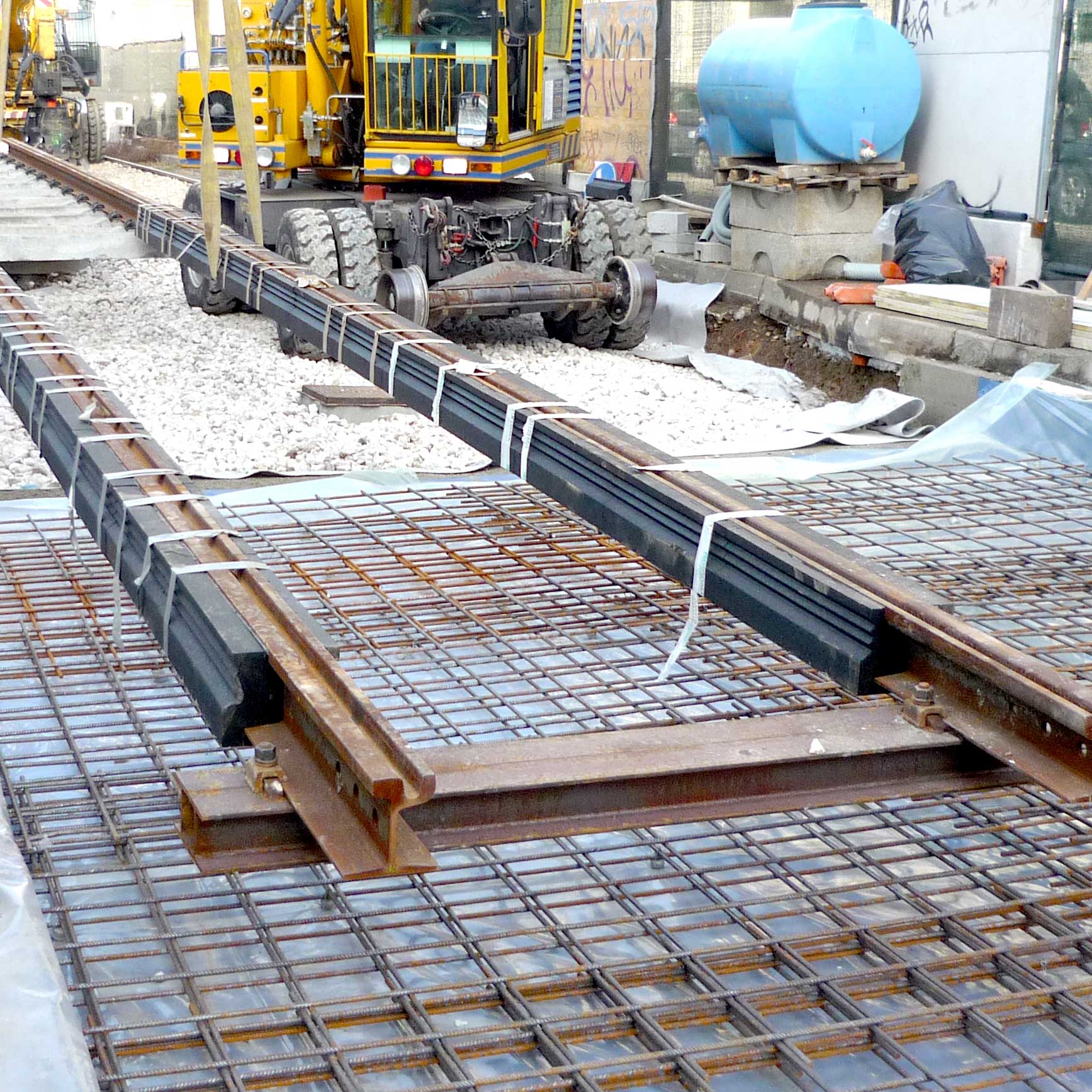
Full rail-encasement elastomeric profiles for embedded/urban tracks: they reduce vibration transmission to adjacent buildings while ensuring electrical insulation and long-term durability.
Under sleeper pads
USP
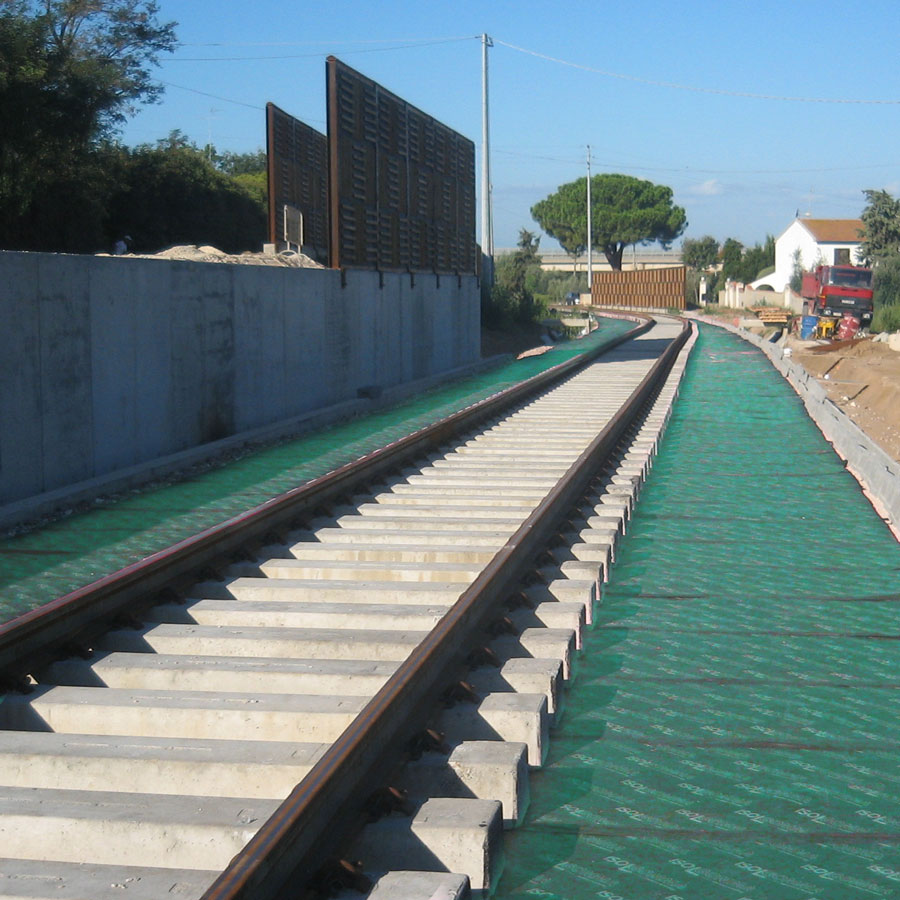
Elastic elements under the sleeper: they improve load distribution, reduce stress on the ballast, extending its service life and lowering maintenance needs along the line.
Measurable benefits along the line.
Better comfort for passengers and residents,
with lower perceived vibration.
Protection of structures
and finishes, including nearby buildings.
Reduced maintenance
through improved load distribution and lower stresses.
Greater track reliability
and steadier service over time.
How to choose the right anti-vibration solution (and where to place it).
Start with the line type and track form: heavy-rail or tramway, on ballast or slab track. With ballast, an elastic layer is installed beneath the ballast (under-ballast), often combined with resilient elements under the sleepers. On slab track systems, the insulation is placed beneath the concrete slab; in urban settings, vibration control is achieved by fully encasing the rail with elastomeric profiles.
Scope and goal matter too: localized issues (switches, curves, joints) call for targeted interventions; near sensitive sites, mass–spring floating slabs are more appropriate. In every case, size the rubber anti-vibration system to load and frequency—get the stiffness right and the material will cut vibration, noise and maintenance.
Our approach to the rail sector.
We start from operating data and context, model the dynamic response and select the right anti-vibration setup (stiffness, damping, thickness), prioritizing high-performance elastomer and rubber systems. We define construction details and verify performance in situ. It’s the same method we use in building and industrial applications: work at the source, design for the real-world case, and execute with precision.
The right solution for your project.
The right anti-vibration solutions, placed at the right point in the track system, balance performance, comfort and durability in rail transport. From rubber components to mass–spring systems, the project is what counts: analysis, anti-vibration material choice, detailing and verification make the difference across the entire life cycle.
Want to go deeper?
Get in touch—we’ll size the solution for your alignment, from a mainline corridor to a city-center tram.