Acoustic insulation and property value:
why a quieter building is worth more.

Acoustic insulation in buildings: why it matters more today.
When choosing a home, an office or an investment property, comfort is no longer a secondary detail. It has become one of the factors that most directly affects how people perceive the quality of a space. And among the elements that matter most, noise is high on the list: footsteps from upstairs, voices between apartments, mechanical systems, outside traffic.
That is why acoustic insulation in buildings is not only about improving the well-being of the people who use them, but also about increasing the overall value of the property. In simple terms, effective acoustic insulation in walls and floors improves living quality, end-user satisfaction and the building’s market appeal.
Acoustic insulation: an extra cost or added value?
Thinking of acoustic insulation as just another added cost is a common mistake. In reality, it is a choice that makes a property more competitive. A quiet building is perceived as better designed, more comfortable and more reliable.
This applies to sales, rentals and also to the enhancement of high-end or newly built properties. In other words, acoustic comfort is not just a technical performance: it is a quality that the market increasingly recognises and rewards.
Acoustic classification of buildings: why it can make a difference.
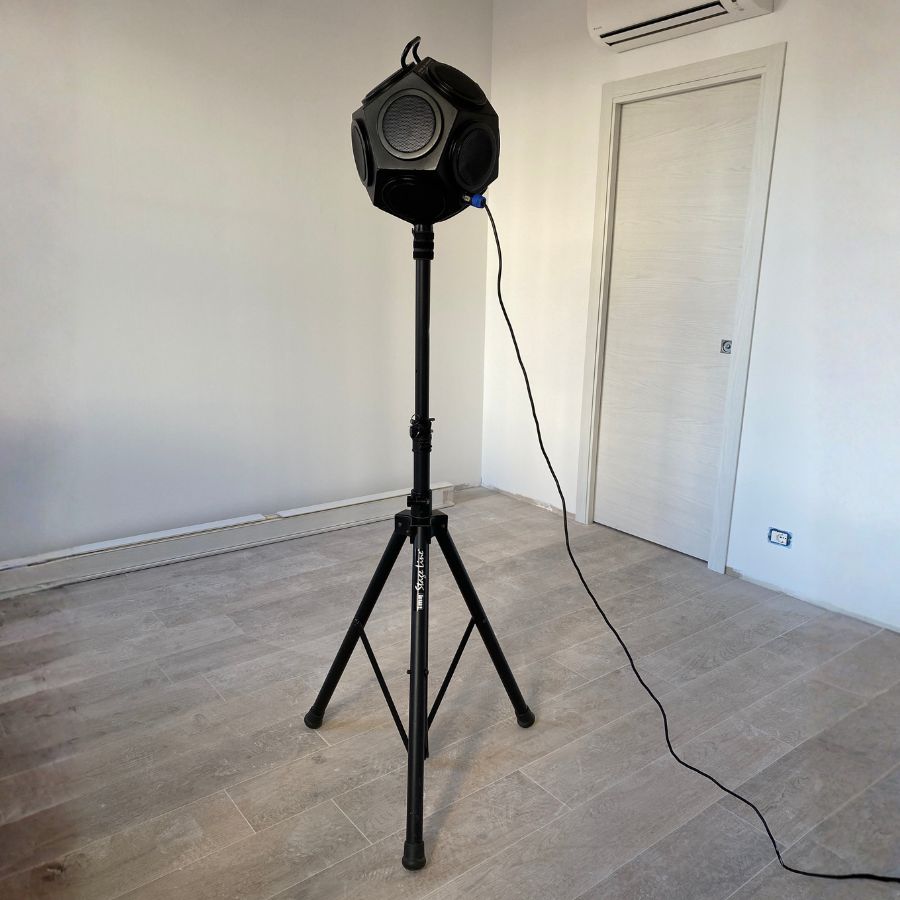
This is where acoustic classification of buildings comes in. In Italy, the main reference is UNI 11367, the standard that defines a method for classifying residential units based on acoustic measurements taken once construction is complete. This classification makes it possible to describe the actual acoustic performance of a property in a clear way and to provide future users with transparent information about its characteristics.
Put simply, it is not enough to say that a building is “quiet.” The acoustic classification of buildings makes that claim measurable.
What acoustic classification measures.
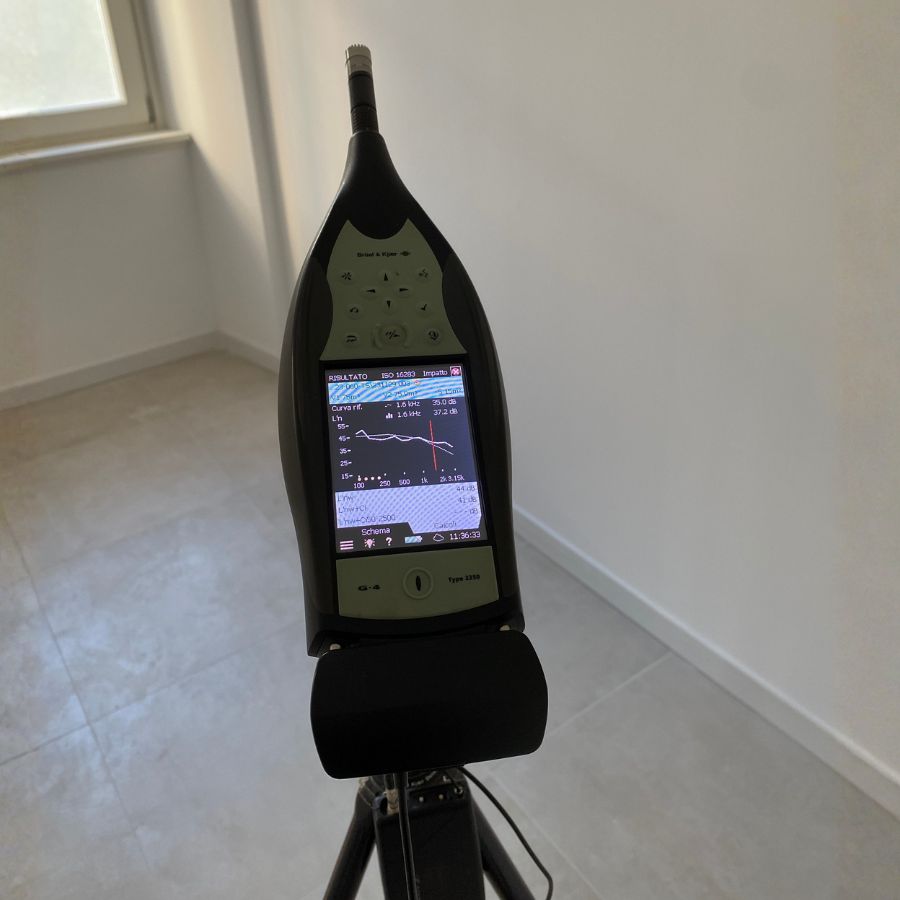
The acoustic classification of buildings is based on concrete parameters: airborne sound insulation between rooms, impact noise, plant noise and other performance indicators. The UNI 11367 standard defines four classes, from Class I, which represents the highest level of performance, to Class IV, which indicates more modest results. Below Class IV, a unit may be considered non-classifiable.
This system is useful because it turns something that is often perceived as subjective into clear, readable and comparable data.
Why acoustic insulation can increase economic value?
The link between acoustic insulation and economic value is very real. A building with better acoustic performance can:
be more attractive
to people looking for a home or a professional space.
Offer a higher
perceived quality than similar properties;
reduce complaints,
dissatisfaction and post-sale issues.
strengthen
the building’s position on the market.
This is not only about living better inside a property. It is also about having an asset that is commercially stronger.
Acoustic insulation in buildings: where real quality is decided.
A building’s acoustic performance depends on very specific choices. Walls, floors, under-screed solutions, slabs, installation details and the treatment of acoustic bridges all contribute to the final result.
This is also why the acoustic classification of buildings does not reward the material alone, but the entire process: design, execution, installation and on-site testing all have a direct impact on the final performance.
Acoustic comfort that becomes value with Isolgomma.
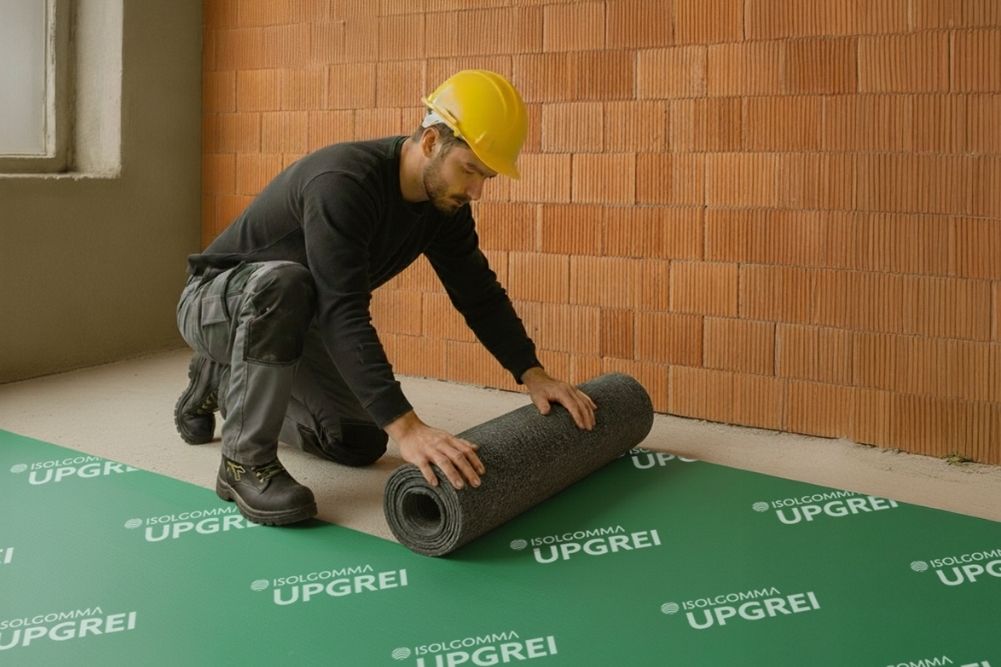
Talking about acoustic insulation in buildings means working toward a very concrete result: spaces that are quieter, more comfortable and more appreciated over time. Our solutions for walls, floors and impact noise are designed precisely to improve living comfort and the perceived quality of a building.
When acoustic comfort is properly designed, a building gains value. Not only from a technical point of view, but also from an economic one.
Good acoustic insulation improves everyday life for the people who use the building and strengthens its value over time. That is why designing for acoustic well-being is not about adding one more detail: it is about building real quality.