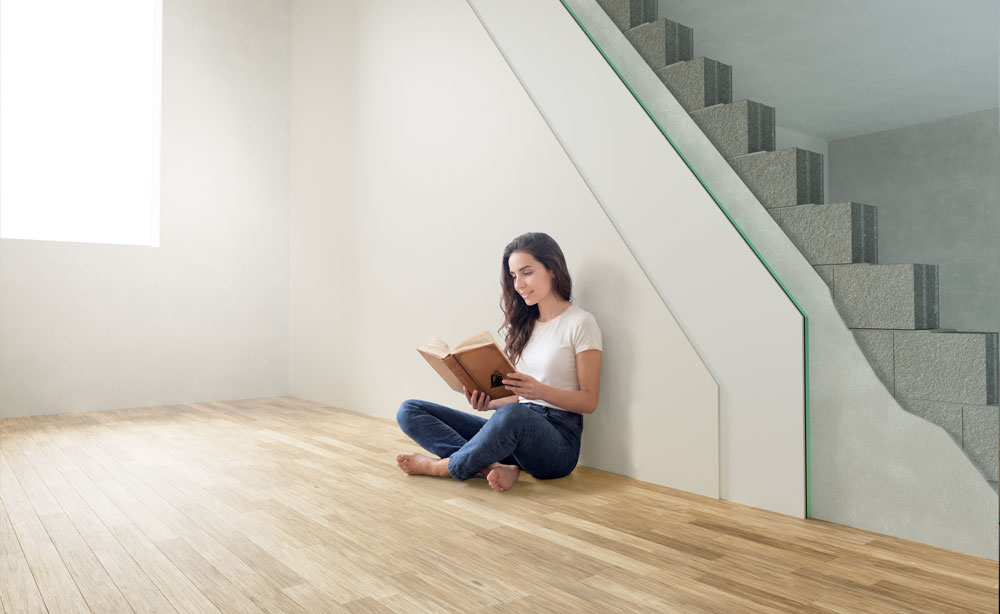
Acoustic insulation panels for single-leaf walls

Isolgomma directly fixed lining systems for single-leaf walls are designed to improve the acoustic insulation of existing walls, reducing airborne noise transmission between adjacent rooms.
Applying acoustic insulation panels directly to the masonry improves the wall’s acoustic insulation performance while adding minimal thickness and eliminating the need for a metal frame.
This solution is particularly suitable for refurbishment projects where acoustic comfort needs to be improved while preserving as much usable floor space as possible.

Excellent environmental performance

Up to 90% recycled material

Certified quality
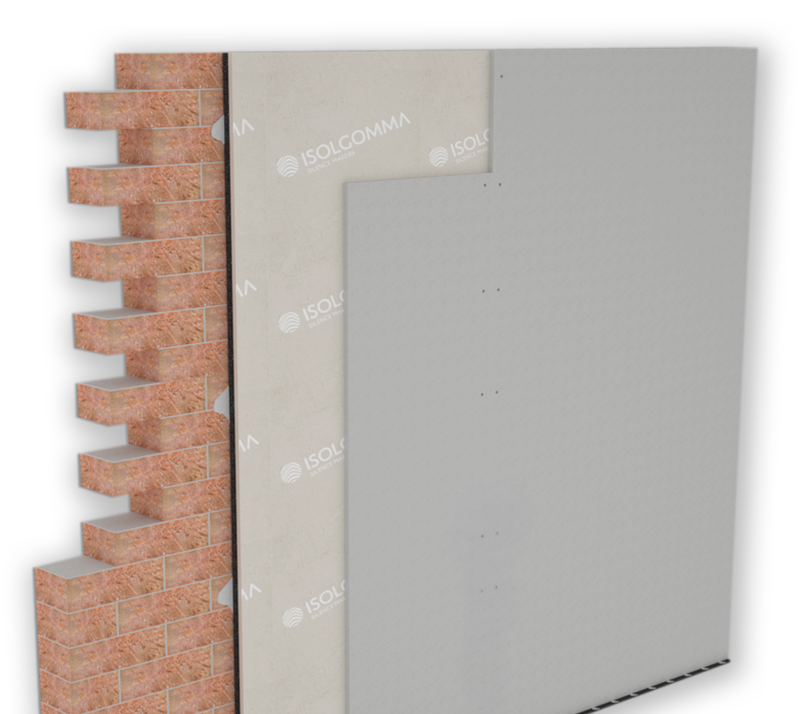
Brick wall 120 mm
Solution for historic buildings
In historic buildings, solid brick walls can provide good acoustic insulation due to their mass, but they may not meet current acoustic requirements.
Applying a composite sound-insulating panel with plasterboard directly to the wall improves sound insulation while adding minimal thickness. Where necessary, the lining can be affixed to both sides of the wall to achieve higher performance.
Existing structure
| Product | Rw(dB) |
|---|---|
| Wall | 42 |
Final structure
| Product | Rw(dB) |
|---|---|
| MUSTWALL 33B | 54 |
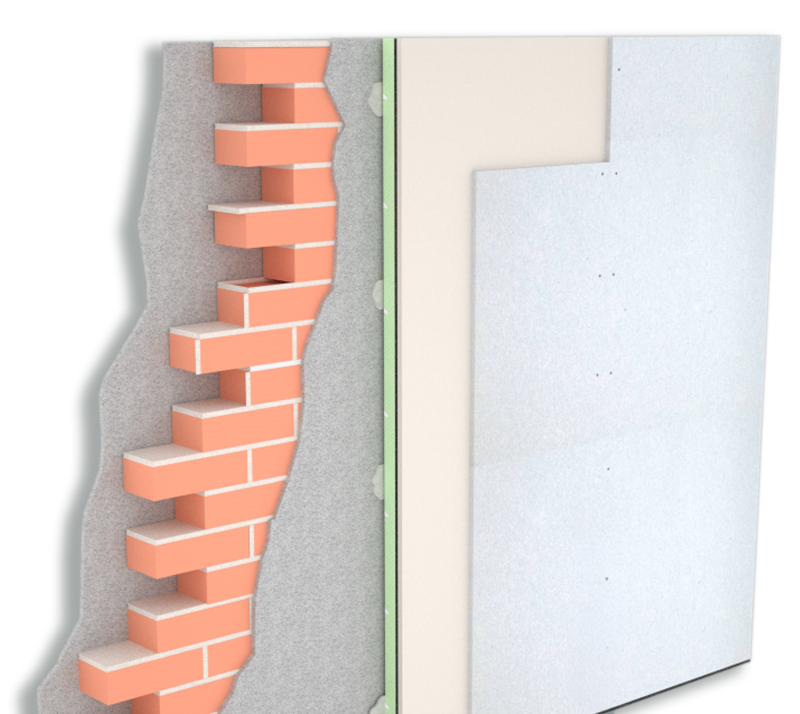
Brick wall 120 mm
Wall lining in traditional construction
Solid brick walls, widely used in traditional construction and especially in buildings erected during the last century, generally provide good acoustic performance due to their high mass.
However, they may not always be sufficient to meet current acoustic comfort requirements.
Applying an acoustic lining finished with plasterboard helps improve airborne sound insulation, reducing the transmission of voices, television and everyday noise, while adding only limited thickness to the existing wall.
Existing structure
| Product | Rw(dB) |
|---|---|
| Wall | 42 |
Final structure
| Product | Rw(dB) |
|---|---|
| REWALL 40 | 57 |
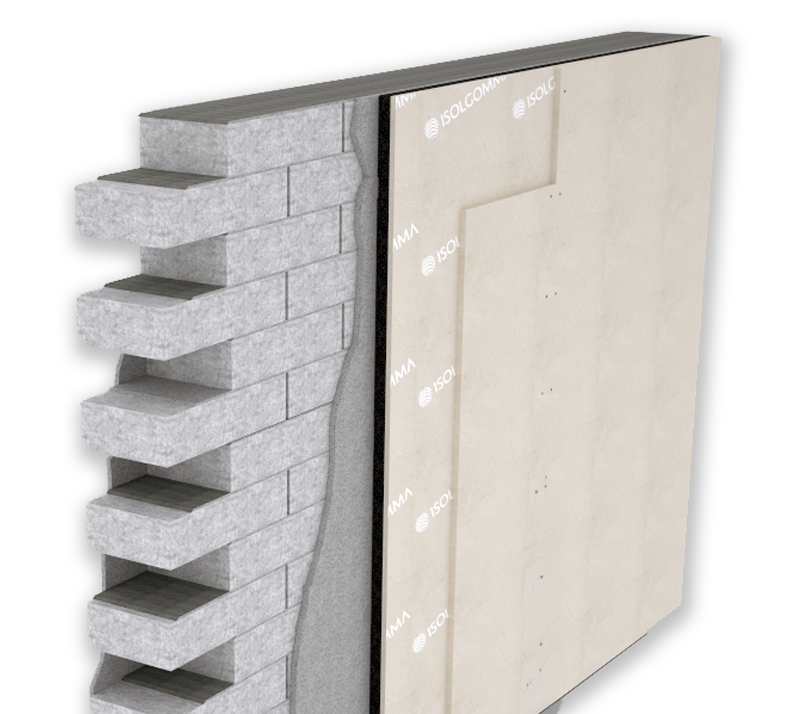
Cellular concrete 215 mm
Solution for existing structures
Concrete block walls are commonly used in residential, commercial and industrial buildings, where sound transmission between adjoining spaces can sometimes be an issue. Their rigid structure may allow the passage of frequencies typically associated with speech and everyday indoor activities.
Adding an acoustic lining helps improve the sound insulation of the existing wall, reducing noise transmission and enhancing privacy and acoustic comfort.
Existing structure
| Product | Rw(dB) |
|---|---|
| Wall | 49 |
Final structure
| Product | Rw(dB) |
|---|---|
| MUSTWALL 33B | 60 |
Cellular concrete wall 215 mm
Solution for existing structures
When space is limited, improving the acoustic performance of an existing concrete block wall requires a solution that combines effectiveness with a reduced build-up.
A slim acoustic lining can help limit sound transmission between adjoining spaces while minimising the impact on the overall wall thickness.
This makes it particularly suitable for refurbishment projects or interiors where preserving usable floor space is an important design requirement.
Existing structure
| Product | Rw(dB) |
|---|---|
| Wall | 49 |
Final structure
| Product | Rw(dB) |
|---|---|
| MUSTWALL 18B | 55 |
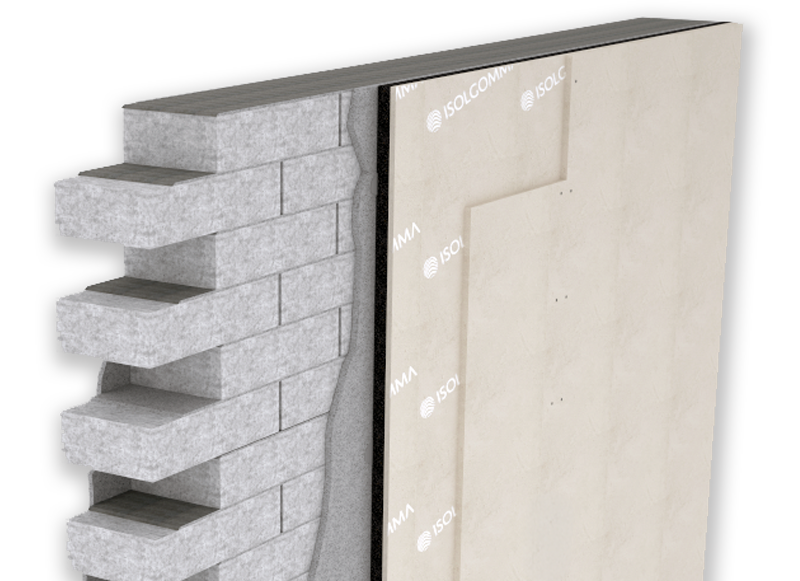
Cellular concrete wall 100 mm
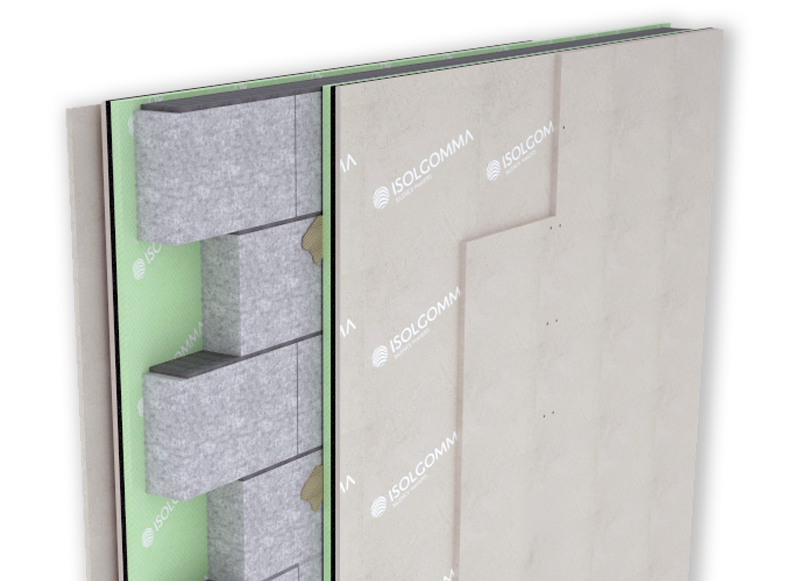
Double-sided wall lining
Lightweight cellular concrete walls may provide insufficient acoustic performance, particularly when separating adjacent rooms or residential units.
Applying an acoustic lining on both sides, finished with plasterboard layers, helps reduce airborne sound transmission, such as voices, television and everyday activities, improving acoustic comfort while keeping the overall wall thickness limited.
Existing structure
| Product | Rw(dB) |
|---|---|
| Wall | 33 |
Final structure
| Product | Rw(dB) |
|---|---|
| REWALL 40 | 61 |
Easy installation
Correct installation is essential for achieving the intended results. Watch our installation video for step-by-step guidance on fitting our products accurately and safely.